
To address the unorganised and inaccessible makhana market, Hajipur-based entrepreneur Nirpendra Mishra along with co-founder Kanchan Devi built a grassroots-driven B2B ecosystem that has transformed a scattered trade into a high-scale industry.
About Agrozest:
His startup Agrozest has swiftly become an integral part of the makhana supply chain across the world from the heart of Bihar. Agrozest solves this “middleman crisis” where farmers are underpaid and bulk purchasers underserved by taking Bihar’s “White Gold” to the world with quality and reliability.
In rural Bihar, makhana is more than just a crop; it is the economic lifeline for thousands of families. But for decades the industry was plagued with:
- Inconsistent pricing Farmers were susceptible to local traders.
- Quality gaps: Without grading, the high quality produce was valued less.
- Gaps in Supply Chains: Global brands don’t have a system to reliably source bulk quantities.
The Spark: From Rs 8,000 to a National Mission
When Nirpendra Mishra and Kanchan Devi took the plunge into the makhana trade, they didn’t start in a boardroom or with venture capital. They started with just Rs 8,000 and a vision is to clear vision: to organize the unorganized.
The idea wasn’t born from a textbook; it came from the dusty markets of Hajipur. Nirpendra realized that while urban demand for “superfoods” was skyrocketing, the farmers producing them were still stranded in a cycle of low margins and limited market reach..
“Our journey is a testament that you don’t need a massive setup to start. “You need to understand the ground reality clearly,” says Nirpendra.
The Evolution: From Local Trader to B2B Giant
The First Fight: Building Trust
The first year was a fire test. The founders managed everything from local sourcing to manual packaging and delivery.
The problems they faced are:
1) Capital Shortage: They have minimum funds to run their business
2) Struggling in Buyer-Trust: They keep ensuring that large wholesalers should have faith in a new brand business.
3) Delaying Payments: In tough financial seasons they also deal with delaying payments in rural trade areas.
The Pivot to B2B: The Turning Point
The breakthrough came when Agrozest changed tack. Rather than selling small packets to individual customers (B2C), they focused on the “engines” of the industry, Wholesalers, Exporters and Food Brands.
They implemented a Direct Sourcing Model and Strict Grading System to solve the bulk buyer’s biggest pain point, “ consistency”.
Characteristics of the Agrozest Ecosystem
Agrozest is not just a trading company, but a structured bridge from the farm to the global market.
- Direct Farmer Sourcing: Cutting out the middle man to increase farmer income.
- Standardized Processing: Modernization of the makhana cleaning, sorting and packing process.
- High volume supply chain : A strong network to meet large industrial orders.
- Quality Assurance: Grading system to ensure every bag meets export quality standards.
Partnership: A Core Competence
The secret of Agrozest’s success is the “Perfect Balance” between its founders:
Nirpendra Mishra: will lead strategy, sourcing of produce and driving expansion into new markets.
Kanchan Devi: Looks after internal functioning, financial discipline and vigour of work force.
Revenue Growth & How it’s Recognized
What began as a small experiment with ₹8,000 has exploded into a ₹25 Crore turnover enterprise in just three years. This growth has not been overlooked:
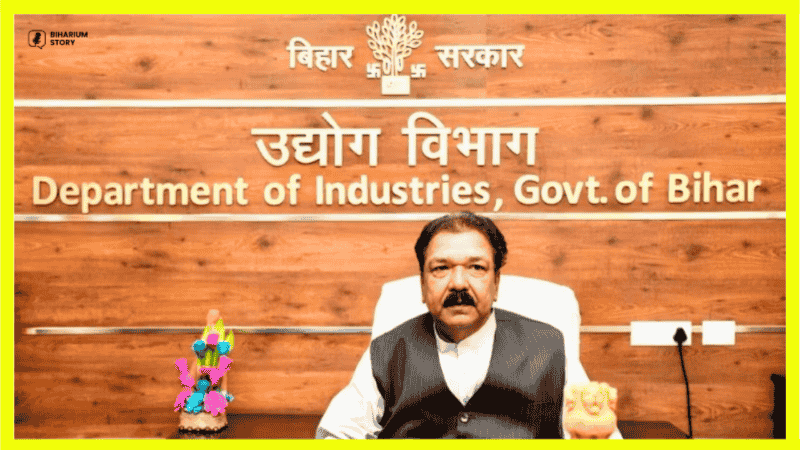
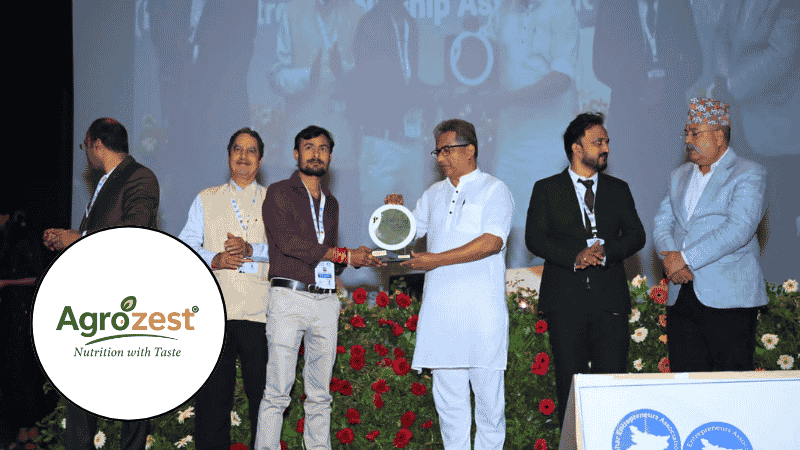
- Bihar Startup Award: Minister Nitish Mishra presents award.
- District Excellence Award: For local impact awarded by Hajipur DM.
Looking Forward
Nirpendra and Kanchan are not stopping at the national borders. They want Agrozest to be the ultimate global makhana brand from India. Their profits are being reinvested back into the supply chain to rebuild the makhana infrastructure so that the “White Gold” of Bihar finally gets the value it deserves in the world. “We built this from the ground up, starting with real-life problems.
“Our growth is underpinned by three years of hard work, honesty and devotion to our farmers.
They told us!!